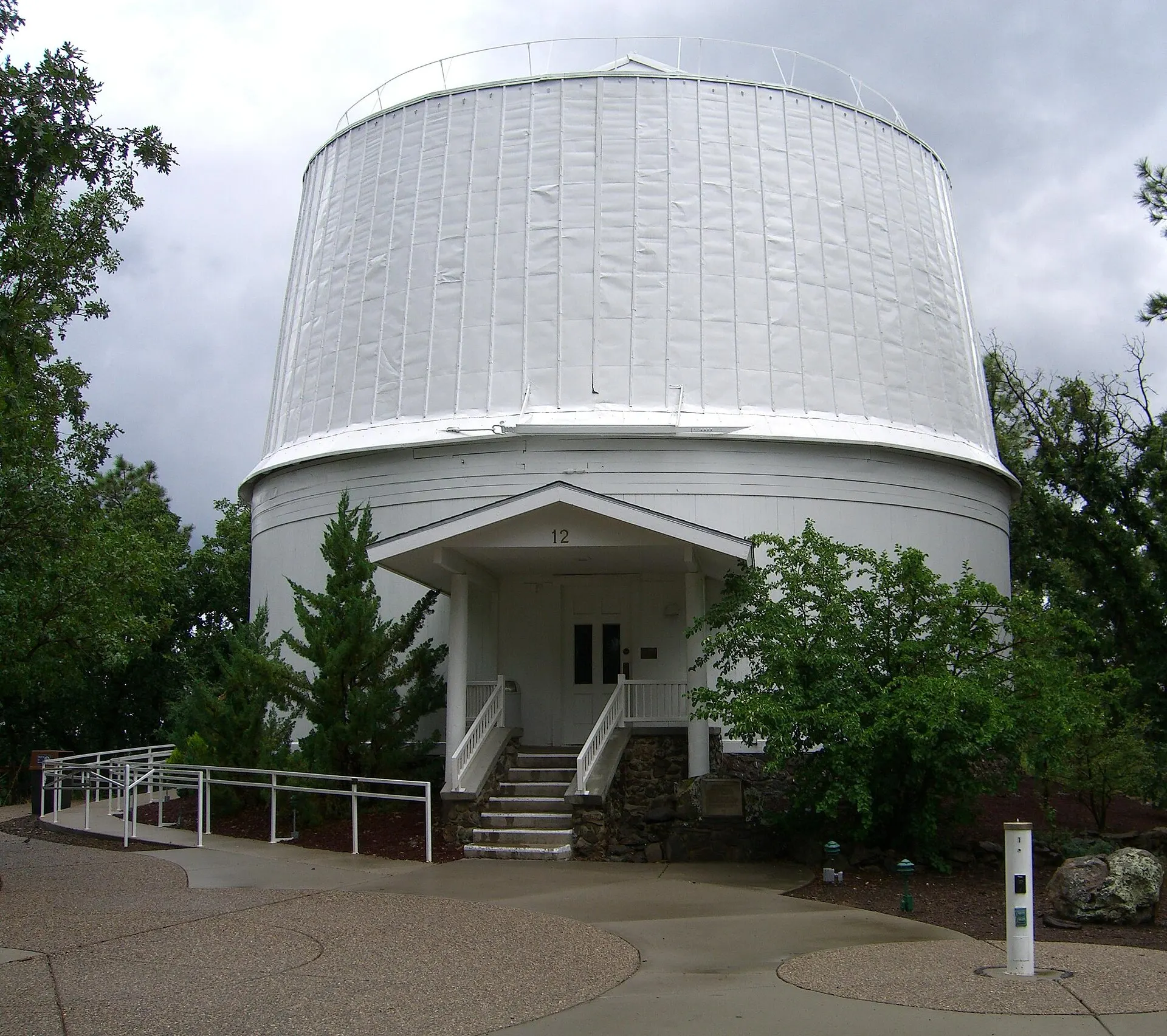
The wooden Clark Dome at Lowell Observatory
Lowell Observatory

Lowell Observatory

Lowell Observatory on Mars Hill is where Pluto was discovered and the expanding universe first showed up. Afternoons are for the history, evenings for the telescopes, and one ticket covers tours, shows, exhibits and stargazing from noon to 10 pm.

Some links on this page are affiliate links. If you book through them, we earn a commission at no extra cost to you. It doesn't change what we recommend. How we make money

Tickets and hours
Checked November 7, 2026Adults $35Closed Tuesdays

Lowell Observatory · Photo: Pretzelpaws / Wikimedia Commons, CC BY-SA 3.0 · Credits

Famous for

What is Lowell Observatory famous for?

Pluto: Clyde Tombaugh found it here in February 1930. Long before that, Percival Lowell built the observatory in 1894 to look for life on Mars, and in 1912 V.M. Slipher measured the first evidence that the universe is expanding. In the 1960s, lunar maps made with the Clark telescope helped prepare the Apollo landings.

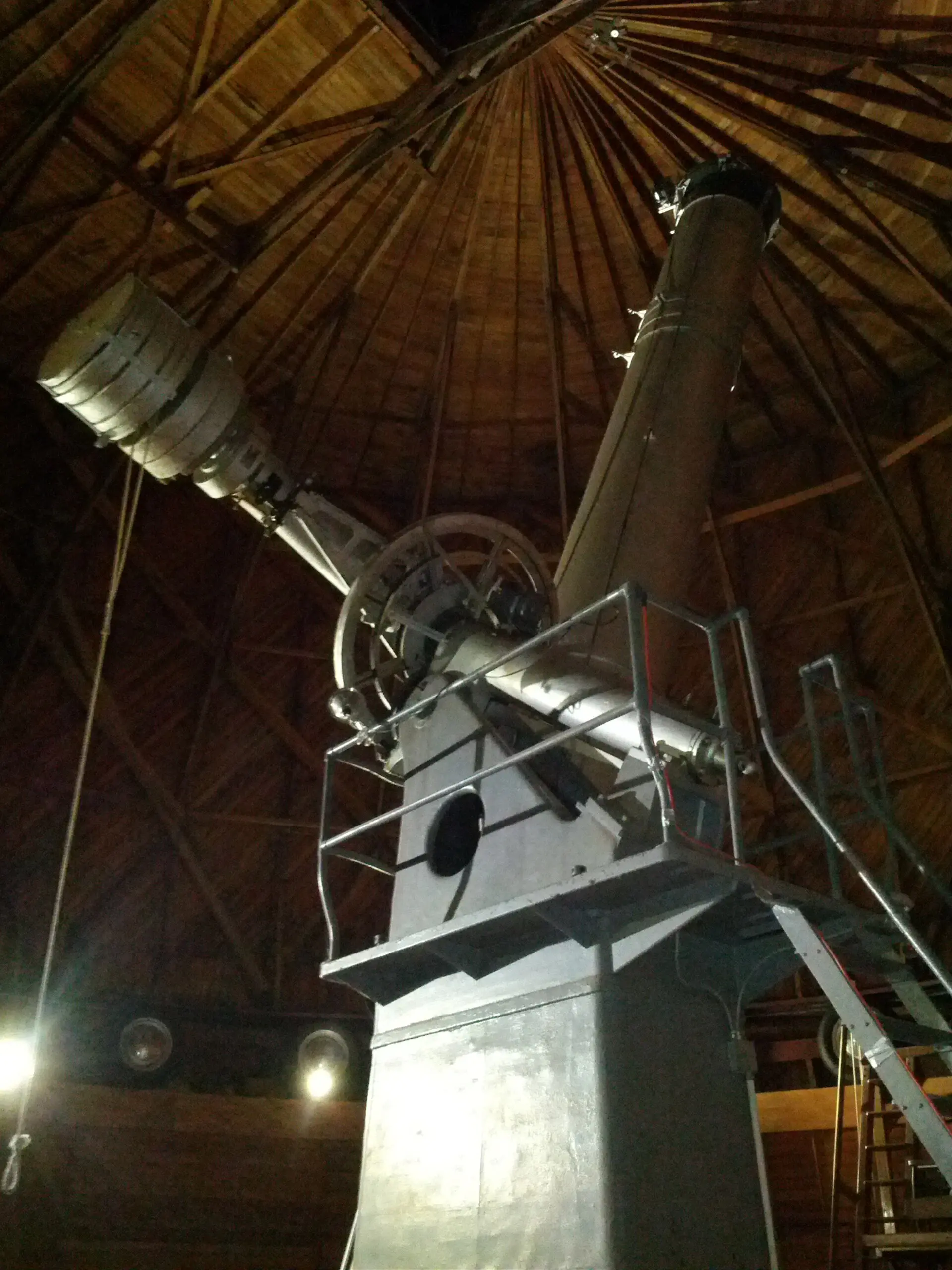
The Alvan Clark refractor telescope inside its dome at Lowell Observatory
The 24-inch Clark refractor, built in 1896 and still used for public viewing.Lowell Observatory · Photo: Jlahorn / Wikimedia Commons, CC BY-SA 3.0
1894
Percival Lowell founds the observatory to search for life on Mars
1896
Alvan Clark & Sons build the 24-inch Clark refractor, still used for public viewing
1912
V.M. Slipher measures the redshifts of galaxies: the first evidence of the expanding universe
1916
Percival Lowell dies; his mausoleum stands near the Clark dome
1930
Clyde Tombaugh discovers Pluto in February, on plates from the 13-inch astrograph
1960s
Lunar maps made with the Clark help prepare the Apollo moon landings
1977
Lowell astronomers help discover the rings of Uranus
What to do

What to do at Lowell Observatory

General admission covers the campus: guided tours, more than 150 exhibits, the historic domes and buildings, theater shows and stargazing. The planetarium show costs extra.

Giovale Open Deck Observatory
Six telescopes from 5.5 to 32 inches on a 4,300-square-foot plaza: a wide-field refractor for star fields, the Moonraker for the Moon and planets, a 32-inch Dobsonian for galaxies, and a live color video camera
Historic Clark Telescope
The 1896 refractor in its wooden dome; viewing daily except Tuesday, from dusk to 9:30 pm, weather permitting
Pluto Discovery Dome
The 13-inch Pluto astrograph Tombaugh used in 1930
Rotunda Museum
Lowell's first telescope, the blink comparator used to find Pluto, and a telescope Tombaugh built from farm scraps
Dark Sky Planetarium
An open-air rooftop amphitheater with heated seats and laser-guided sky tours; the show changes with the moon phase
Astronomy Discovery Center
The Orbits Curiosity Zone for kids, the Stardust Lab gallery and the Lowell Universe Theater
Solar viewing
Sunspots and flares through a filtered H-alpha telescope by day
Stargazing

How long should you spend at Lowell Observatory?

An afternoon and an evening. The 1 pm walking tour and the afternoon shows come first, the same-day ticket lets you go to dinner downtown, and the telescopes open after dark. Staff point them at whatever is best that night: planets, the Moon, star clusters, nebulae and galaxies.

On a cloudy night the telescopes stay shut, but the exhibits, theater and planetarium still run. Winter nights in Flagstaff can drop to around 20°F, and summer evenings cool fast.

Stargazing in Flagstaff

  • 1 pm

    WhatHistoric walking tourDetailsThe founding, Mars and the Clark dome
  • 3 pm and 7 pm

    WhatMeet the PlanetsDetailsA 25-minute live tour of the solar system in the theater
  • 4 pm

    WhatCosmic HighwaysDetailsAn hour on Route 66 and astronomy, with rarely seen collection pieces
  • After dark

    WhatTelescopesDetailsThe Open Deck and the Clark, plus the planetarium show
Tickets

How much is Lowell Observatory?

$35 for adults, $30 for seniors 55 and over and $20 for kids 6 to 17, with children under 5 free. You don't need to reserve general admission, and your ticket lets you back in the same day.

Locals and students get cheaper tickets at the desk, and the private 75-minute session on the 24-inch Dyer Telescope is $575 for a group.

Adults (18+)
$35, or $43 with the Dark Sky Planetarium show
Seniors (55+)
$30, or $38 with the planetarium
Kids (6–17)
$20, or $28 with the planetarium
Under 5
Free
Extra shows
$8 each
Discounts at the desk
Military adults $30, kids $15; locals $20 on Mondays, Wednesdays and Thursdays; students and Arizona Native Nations $20
Reservations
Not needed for general admission; on-site sales end at 9 pm
Re-entry
Allowed the same day with your ticket
Hours and visit

Open six days a week

Lowell is up on Mars Hill, a short drive west of downtown. Parking is first come, first served. On Tuesdays the campus is closed.

Open
Monday and Wednesday to Sunday, noon to 10 pm
Closed
Tuesdays, and on Thanksgiving, Christmas Eve, Christmas Day and New Year's Day
Address
1400 W Mars Hill Rd, about 1.75 miles from downtown
Parking
First come, first served. No overnight parking or camping on campus
Pets
Not allowed. Service animals are welcome
Elevation
7,250 ft on Mars Hill; nights are cold, even in summer
Research telescopes

Lowell's research telescopes

Lowell's big research telescopes work at dark-sky sites away from Mars Hill. At Anderson Mesa, the 42-inch Hall Telescope has studied comets and asteroids since 1970. The 4.3-meter Lowell Discovery Telescope, formerly the Discovery Channel Telescope, can carry five instruments at once and is one of the most versatile telescopes in the world.

These are working research telescopes, not part of a regular visit. On Mars Hill, the public telescopes are the Open Deck, the Clark and the Dyer.

  • Lowell Discovery Telescope

    Size4.3 mWhereResearch site, not open for regular visits
  • Hall Telescope

    Size42 in (1.1 m)WhereAnderson Mesa, research site
  • Dyer Telescope

    Size24 inWhereMars Hill, private group sessions ($575)
  • Clark refractor

    Size24 inWhereMars Hill, public viewing
Where to stay

Hotels a short drive from Mars Hill

Downtown hotels are the closest to the observatory and to dinner between the afternoon and the evening.

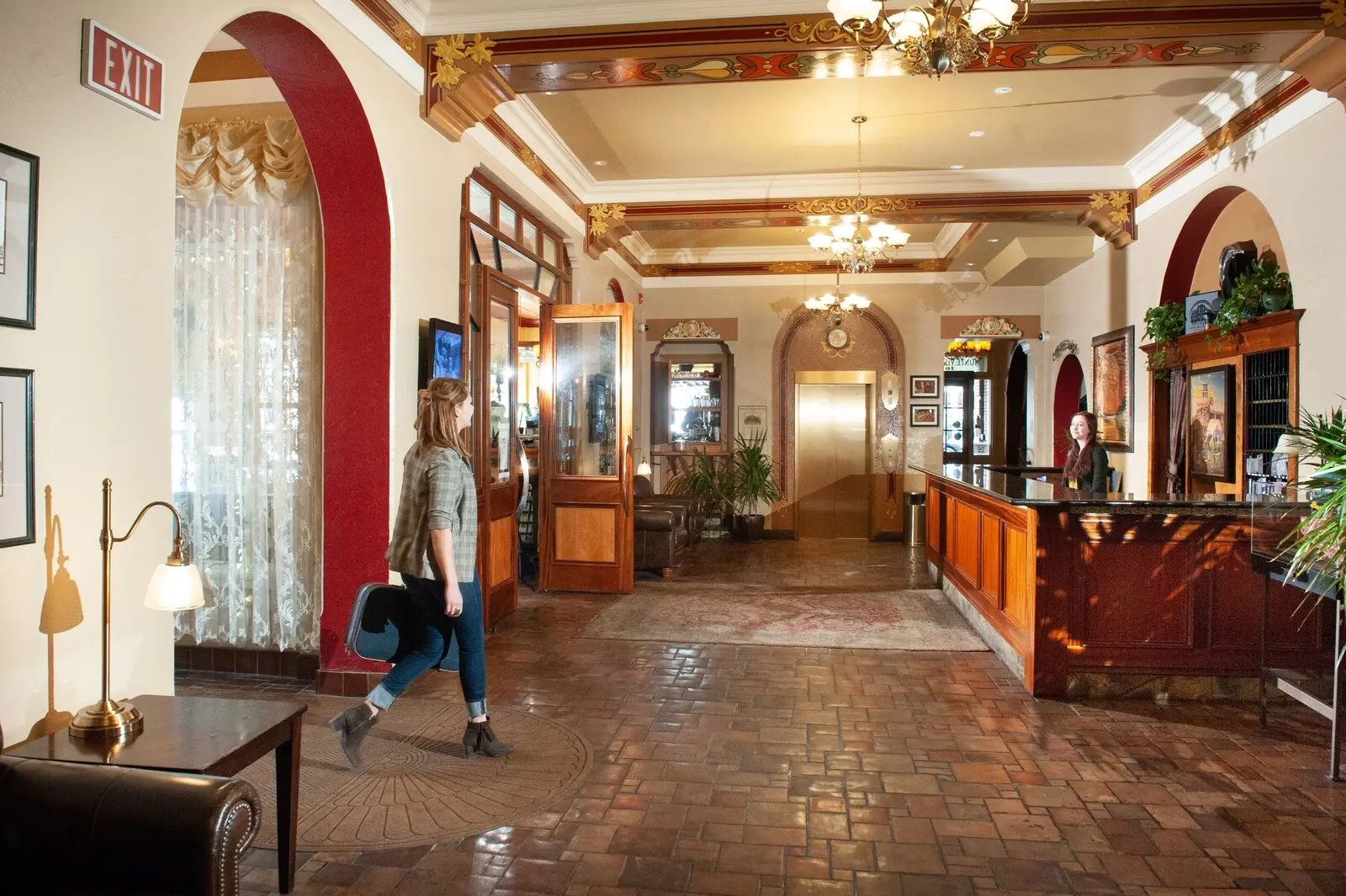
  1. Hotel Monte VistaPhoto: Expedia

    1 / 7

    Best historic stayDowntown and Southside 8.0/10 on Expedia

    Hotel Monte Vista

    Parking $50 a day in a nearby lot; limited spaces at the hotelNo petsBreakfast extra

    Downtown, 1.75 miles from Mars Hill, so dinner between the afternoon tour and the evening telescopes is a short walk.

    • Good for Walking to downtown bars and restaurants
    • Good for History: the hotel opened in 1926
    • Skip if You travel with a pet

    Check prices on Expedia Photos, rules and fees

  • Bespoke Inn FlagstaffDowntown and Southside 9.8/10 on Expedia · 426 reviewsFree parkingPets: dogs only, up to 2Check prices
  • Residence Inn by Marriott FlagstaffDowntown and Southside 9.6/10 on Expedia · 1,002 reviewsParking $10 a dayPets: up to 2 petsCheck prices

Downtown Flagstaff

Quick answers

Where is Lowell Observatory?

On Mars Hill, at 1400 W Mars Hill Road, about 1.75 miles from downtown Flagstaff.

Is Lowell Observatory free?

No. General admission is $35 for adults, $30 for seniors and $20 for kids 6 to 17. Children under 5 are free.

Is Lowell Observatory open today?

It's open every day except Tuesday, from noon to 10 pm, and closed on Thanksgiving, Christmas Eve, Christmas Day and New Year's Day.

Do you need reservations for Lowell Observatory?

Not for general admission. Tickets are sold on site until 9 pm, or online in advance.

Is Lowell Observatory worth it?

On a clear evening, yes. One ticket covers tours, more than 150 exhibits, theater shows and stargazing on six telescopes plus the historic Clark.

When was Lowell Observatory built?

Percival Lowell founded it in 1894; the Clark refractor followed in 1896.