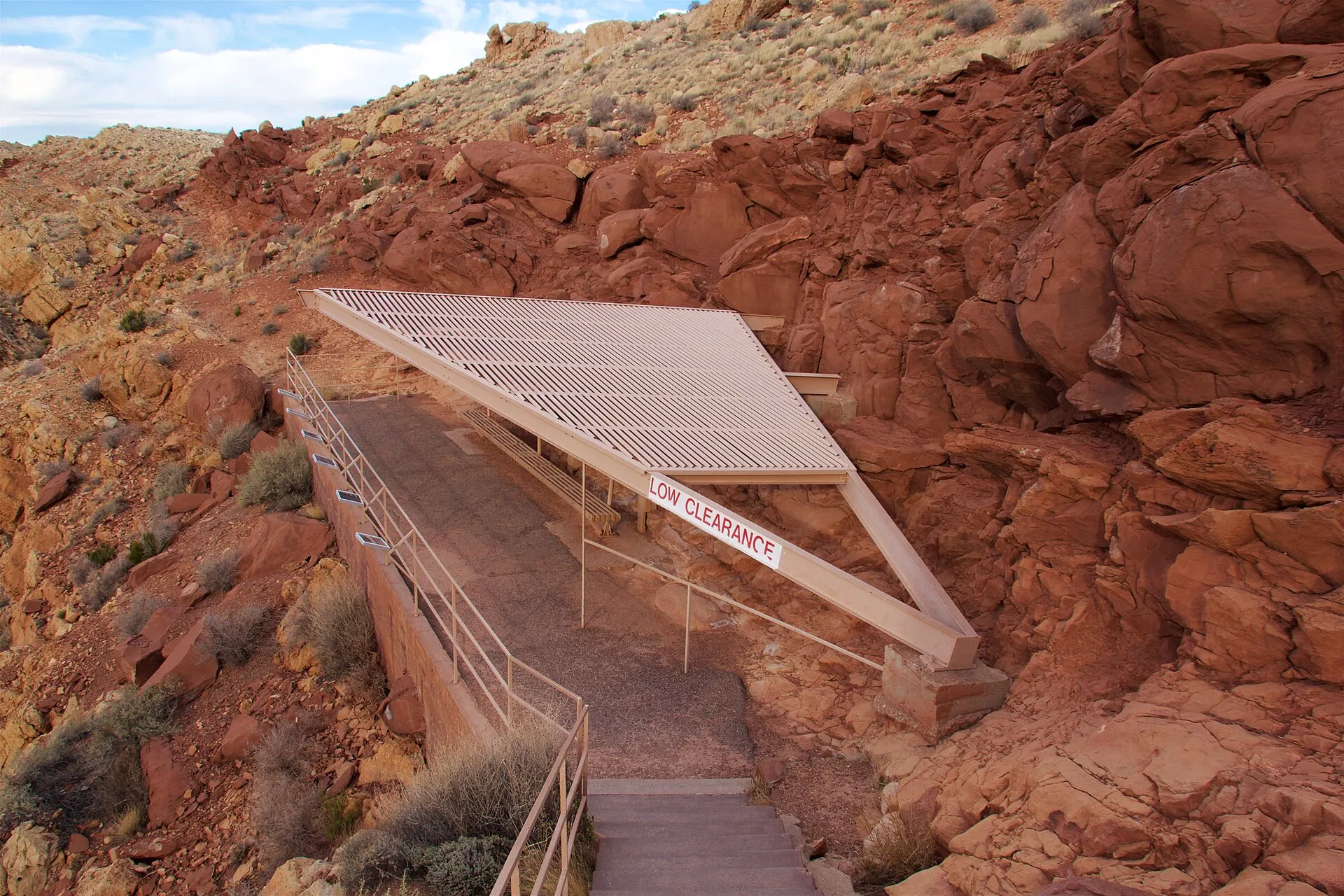
Looking across the bowl of Meteor Crater from the rim
Meteor Crater

Meteor Crater

About 50,000 years ago an iron meteorite hit the desert east of Flagstaff at 26,000 mph and blasted out a crater almost a mile wide. Today it's the best-preserved impact site on Earth, 43 miles from town off I-40, with a guided rim walk included in your ticket.

Some links on this page are affiliate links. If you book through them, we earn a commission at no extra cost to you. It doesn't change what we recommend. How we make money

Tickets and hours
Checked November 7, 2026Adults $29Open 8 am–5 pm

Meteor Crater · Photo: Mike Peel / Wikimedia Commons, CC BY-SA 4.0 · Credits

Where it is

Where is Meteor Crater?

Meteor Crater is in the high desert of northern Arizona, between Flagstaff and Winslow. Take I-40 east to exit 233 and follow Meteor Crater Road to the visitor center on the north rim. From downtown Flagstaff it's about 43 miles, roughly an hour without traffic.

It's on private land, not in a national park: the Barringer family owns it, and Meteor Crater Enterprises runs the visitor center. The trails and lookouts start behind the Discovery Center.

Distances from Flagstaff Walnut Canyon on the way

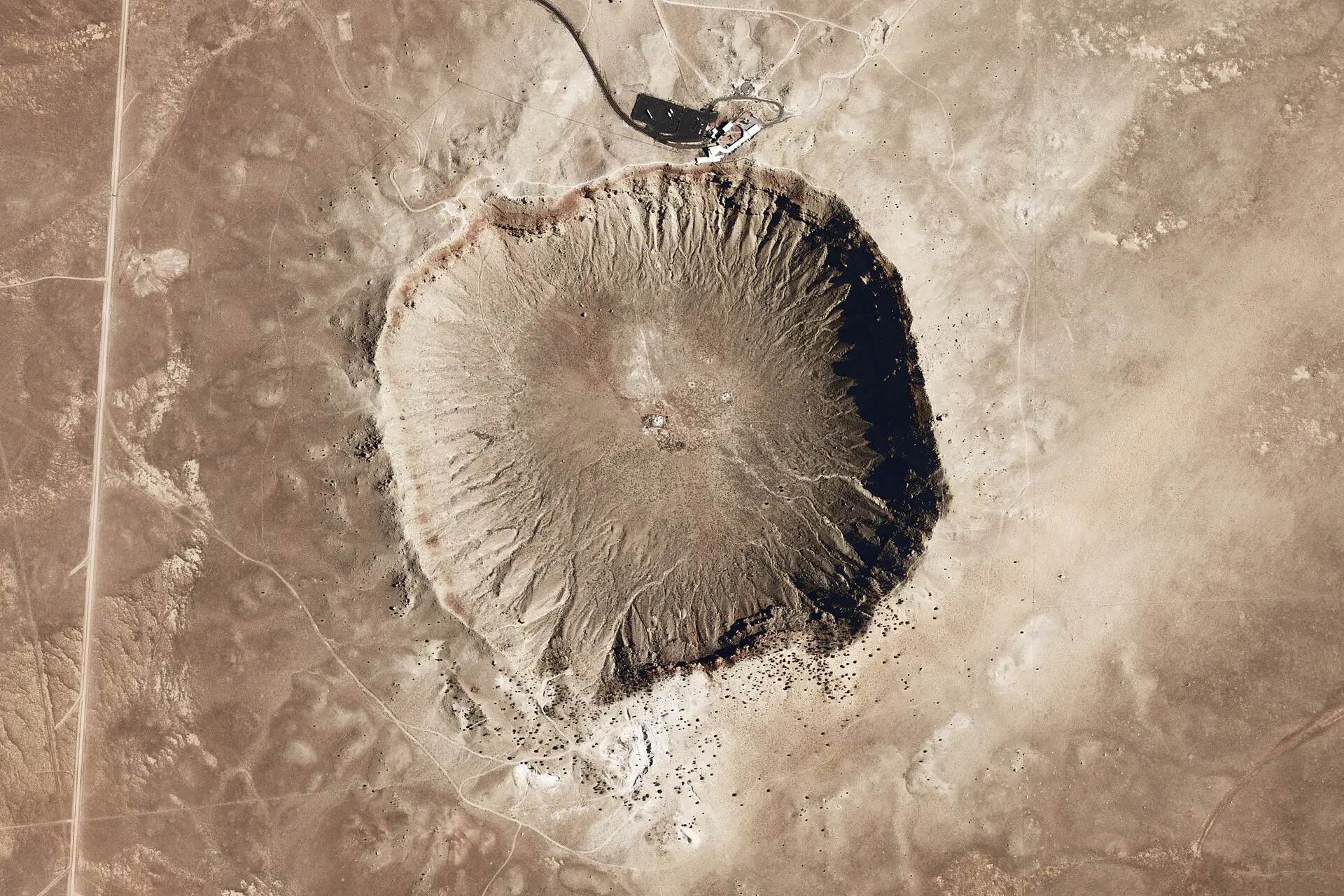
Aerial view of Meteor Crater in the flat desert east of Flagstaff
From the air, the crater's raised rim stands out from the flat desert around it.Meteor Crater · Photo: National Map Seamless Server / NASA Earth Observatory / Wikimedia Commons, Public domain
How it formed

How was Meteor Crater formed?

About 50,000 years ago, an iron-nickel meteorite about 150 feet across came out of the northeastern sky at roughly 26,000 miles per hour and hit a flat, rocky plain. In seconds the impact blasted out more than 175 million tons of limestone and sandstone, which landed as a blanket of shattered rock for a mile in every direction. Most of the meteorite melted in the blast.

It was the last ice age, and the land around was cooler, wetter forest where mammoths and giant ground sloths grazed. A lake later formed in the crater and its sediments made the bowl shallower. When the climate dried out, the desert preserved the crater almost unchanged, which is why it looks so fresh today.

It isn't the crater that killed the dinosaurs. That was Chicxulub in Mexico, about 66 million years ago, and far larger.

Age
About 50,000 years, during the last ice age
Width
Almost a mile across, more than 4,000 feet
Depth today
About 550 feet; it was closer to 750 feet before an ice-age lake filled the bottom with sediment
Rim
2.4 miles around
The meteorite
Iron-nickel, about 150 feet across and several hundred thousand tons
Speed
About 26,000 miles per hour
Force
About 150 times the atomic bomb dropped on Hiroshima
Largest piece found
The 1,406-pound Holsinger Meteorite, on display in the Discovery Center
What you'll see

What is there to do at Meteor Crater?

Everything below is included in general admission. On the rim tour, watch the south wall: rock layers that were once deeply buried were pushed up more than 250 feet above where they started.

Guided rim tour
An easy 30 to 40-minute walk on the rim with a guide, past the uplifted south wall
Lookout points
Four viewpoints, from the deck behind the Discovery Center to Moon Mountain, the highest, with fixed telescopes
Discovery Center
Hands-on exhibits on impacts, Daniel Barringer and the 1908 Siberian explosion, plus an air-conditioned indoor view of the crater
IMPACT! theater
The film on how the crater was proven to be a meteorite impact
COLLISION! 4D
A space-mission ride with motion seats
The Blast Zone
An indoor moonbase play area for kids, with a gravity floor and a lunar lander game
Apollo capsule
An Apollo test capsule outside the Discovery Center; Apollo astronauts trained at the crater in the 1960s
Tickets

How much is Meteor Crater?

$29 for adults, $27 for seniors 60 and over and $25 for juniors 6 to 12; children 5 and under and active-duty US military get in free. Park passes like America the Beautiful don't apply, because it's private land.

Tickets are good for any date and don't expire, so you can buy ahead and come when the weather's right. They can't be refunded.

Adults (13–59)
$29
Seniors (60+)
$27
Juniors (6–12)
$25
Children 5 and under
Free
Veterans and non-active military
$25
Active-duty US military
Free
Ticket dates
Good for any date, no expiry, but not refundable
Your visit

Hours, tours and pets

The free rim tour takes 30 to 40 minutes. Tours down to the crater floor are on hold while the trail is repaired. For the full circuit, the Saturday Full Rim Hike goes beyond the public trails to the astronaut training sites.

Pets aren't allowed at the crater, but a shaded pet ramada lets them wait while you're on the rim.

Hours
8 am to 5 pm daily
Holidays
Thanksgiving until noon, closed on Christmas Day
Crater floor
Floor tours are paused while the trail is repaired; the rim is as close as you get
Full Rim Hike
Saturdays at 9 am: 2.5 miles, about 3 hours, $55 including admission. For experienced hikers; sign up in advance
Pets
Not allowed at the crater. There's a shaded pet ramada
Getting there
I-40 exit 233, then Meteor Crater Road. About 43 miles from downtown Flagstaff, roughly an hour
Phone
928-289-5898
Where to stay

Hotels on the east side of Flagstaff

Meteor Crater has an RV park but no hotel. The hotels along I-40 and Route 66 on Flagstaff's east side put you closest to the interstate. Twin Arrows sits right on I-40, east of town.

  1. Little America FlagstaffPhoto: Expedia

    1 / 7

    Best for road trips and RVsEast Flagstaff and Route 66 9.8/10 on Expedia

    Little America Flagstaff

    Free parkingPets: dogs and catsBreakfast extra

    On the east side, the right side of town for I-40 east to the crater, with a deli and a grocery store for the drive.

    • Good for Families who want a restaurant, deli and grocery store on site
    • Good for Road trips with an RV, bus or truck
    • Skip if You're under 21

    Check prices on Expedia Photos, rules and fees

  • Twin Arrows Navajo Casino ResortTwin Arrows 9.4/10 on Expedia · 2,659 reviewsFree parkingNo petsBreakfast extraCheck prices
  • Americana Motor Hotel in Flagstaff near NAU/DowntownEast Flagstaff and Route 66 9.4/10 on Expedia · 1,704 reviewsFree parkingPets: 1 dogBreakfast includedCheck prices
  • Days Inn & Suites by Wyndham East FlagstaffEast Flagstaff and Route 66 9.0/10 on Expedia · 1,237 reviewsFree parkingPets: dogs and cats, up to 2, set rooms onlyBreakfast includedCheck prices

All hotels in East Flagstaff Meteor Crater RV Park

Quick answers

Why is Meteor Crater also called Barringer Crater?

After Daniel Moreau Barringer, a Philadelphia mining engineer who took an interest in the site in 1902 and argued that an iron meteorite had made it. Settlers had called it Coon Butte and taken it for an extinct volcano. Its official name is Barringer Meteorite Crater, and it became a National Natural Landmark in 1968.

Is Meteor Crater a national park?

No. The crater is on private land owned by the Barringer family and run by Meteor Crater Enterprises. National park passes don't apply; you buy a ticket at the crater.

Is Meteor Crater the crater that killed the dinosaurs?

No. Meteor Crater is about 50,000 years old. The dinosaurs died out about 66 million years ago, after the much larger Chicxulub impact in Mexico.

How deep is Meteor Crater?

About 550 feet today, and almost a mile across. Right after the impact it was about 750 feet deep, before lake sediments partly filled it.

Can you see Meteor Crater without paying?

No. The rim is on private land, so you need a ticket. Admission includes the guided rim tour, the lookout points and the Discovery Center.

How long should you spend at Meteor Crater?

The guided rim tour takes 30 to 40 minutes. Add time for the four lookout points, the Discovery Center and the two films.

Is Meteor Crater worth it?

If you like geology or space, yes: it's the best-preserved meteorite impact site on Earth, Apollo astronauts trained here, and the rim tour is included. Combine it with Walnut Canyon, also off I-40 east of town.